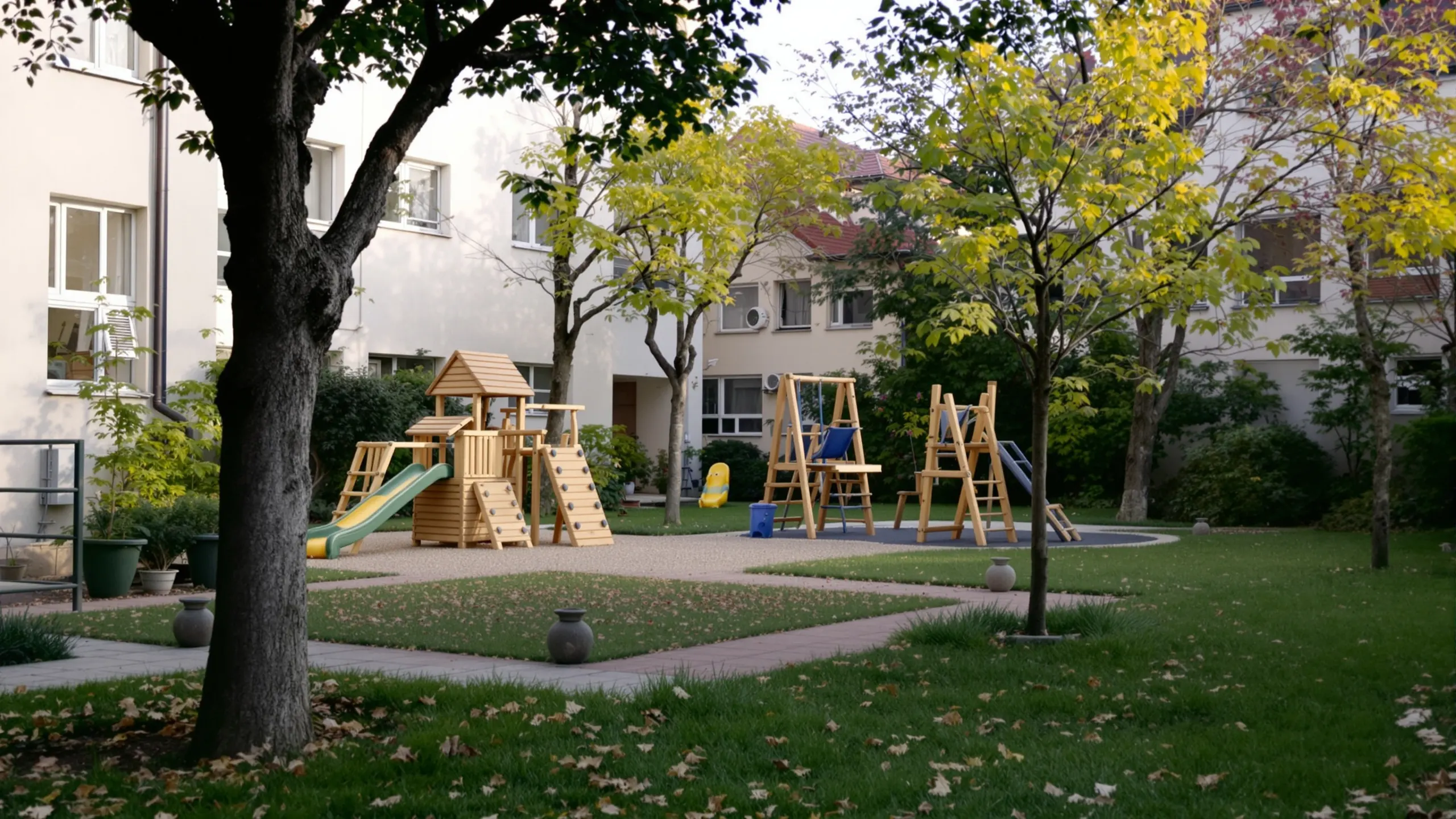
Switzerland has excellent childcare providers, but the system is decentralised and often expensive. Availability, subsidies and fee structures vary by canton and commune.
Kita / daycare
Daycare places for babies and preschool children are offered by public, subsidised and private providers. Full-time care can run into several thousand francs per month in high-cost urban areas before subsidies.
For the surrounding context, see living in Switzerland.
Waiting lists are common. Apply as soon as your relocation date and commune are realistic.
School-age children still need a plan
Swiss schools can finish earlier in the day than working parents expect, and lunch supervision or after-school care is not identical across communes. Hort, Tagesschule and other structures vary locally.
A commune with a lower tax rate can be a worse family choice if it has limited after-school coverage and forces one parent to reduce work.
If this decision changes the viability or sequence of your move, a Swiss relocation strategy consultation can apply it to your own facts.
Nannies and household employment
Employing a nanny creates employer obligations: salary, AHV/social-security reporting, accident insurance and, depending on the arrangement, pension obligations. Do not pay regular household staff informally.
For the surrounding context, see international schools.
Subsidies
Cantonal and communal subsidies can reduce childcare costs depending on income, assets, family size and provider. Eligibility can change dramatically across a cantonal border.
Put childcare into the canton comparison
For a dual-income household, compare the after-tax cost of work in each location: income tax, commute, childcare, rent and insurance.
For the surrounding context, see English-friendly cantons.
The best canton is the one where the family can actually live the life the tax model assumes.
Why you need prices before you choose the commune
There is no single national Swiss childcare tariff. Private providers, subsidised places and municipal models can produce very different bills for families with the same income in neighbouring communes. Subsidies can also be means-tested against income and, in some places, wealth.
Ask for four numbers before you sign a lease: the full private day rate, the subsidised rate you might qualify for, meal/extras charges, and the cost of school-age lunch/after-school coverage. Then ask what happens during school holidays.
If both parents work in English, childcare can be the first place a child acquires the local language. That can be an advantage before public school. An international school plus English-speaking nanny may make the transition easier but can slow local integration and increase the household budget materially.
For permit and long-term citizenship planning, the family should also think beyond the first year: where will the child be in five years, and which language will the family actually use in daily life?
The correct childcare budget is not “what does a Kita cost in Switzerland?” It is “what will our exact weekly schedule cost in this exact commune?”