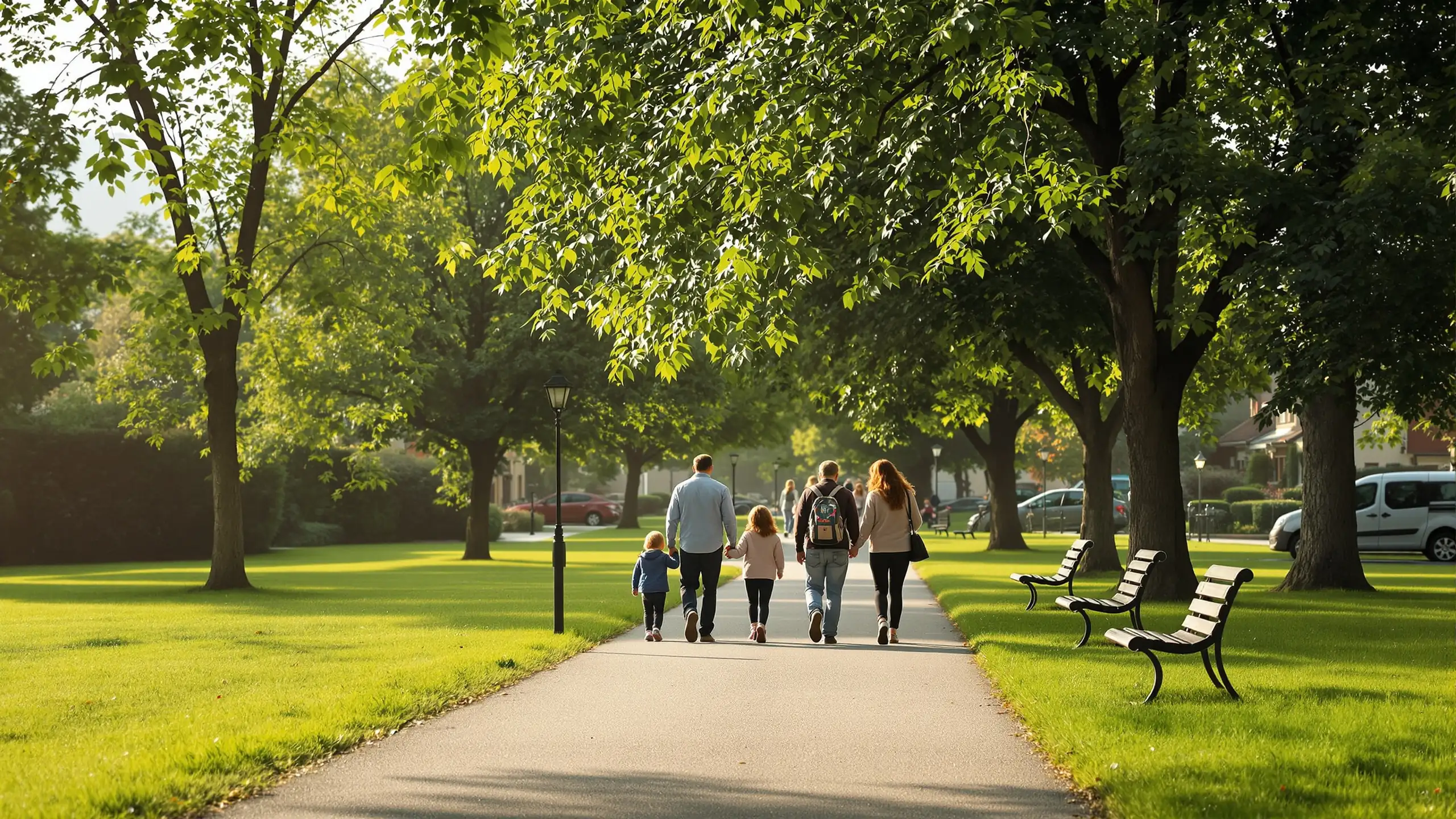
Then real life begins. You need a school run, a doctor, a supermarket, a commute and people you actually want to spend time with.
Families should put Swiss childcare into the same commune decision rather than treating it as a later practical detail.
Your commune matters more than newcomers expect
Switzerland is intensely federal. The canton and commune influence:
For the surrounding context, see Swiss childcare.
- personal income and wealth tax;
- health-insurance premiums;
- schools and childcare;
- language and social environment;
- commute and public transport;
- housing costs and availability.
A lakeside Zurich commune, central Zug, a village in Schwyz, Basel, Geneva and a Valais mountain community may all be “Switzerland”, but the daily experience is very different.
Housing: prepare early
The rental market is competitive in many economically strong regions. A complete application file makes a difference, particularly when you have no Swiss credit history.
Think of housing and mobility together. A cheaper home 40 minutes farther out can be a bargain, or an expensive mistake once you add two cars, childcare logistics and lost time.
Optimise time as well as tax.
Family: childcare can change the economics
Childcare in Switzerland is highly local. Daycare centres, childminders and school-age care differ in availability, opening hours, fees and subsidies by canton and commune.
For the surrounding context, see international schools.
For two working parents, this can be one of the largest household expenses. Check places and prices before signing the lease, not after.
Public schools are generally strong, but the local language matters. International schools can solve the transition problem for English-speaking families, at a significant private-school cost.
If this decision changes the viability or sequence of your move, a Swiss relocation strategy consultation can apply it to your own facts.
Healthcare: compulsory, individual and visible
Every resident normally needs compulsory basic health insurance. Premiums are paid per person. The 2026 average is CHF 393.30 per month across all insured persons; the average adult premium is CHF 465.30.
The system delivers high-quality care, but a family budget should include premiums, deductibles and co-payments rather than looking only at net salary.
English can get you started. It may not be enough forever.
In Zurich, Zug, Basel, Geneva and Lausanne, a professional can live surprisingly well in English at first. But administration, schools, neighbours and long-term integration run in German, French or Italian.
Language matters even more if permanent residence or citizenship is part of your plan.
Public transport changes the map
Switzerland’s rail and local-transport network makes living outside a city centre much more practical than in many countries. Always test the actual door-to-door commute at the times you will use it.
A 25-minute train can be better than a 15-minute drive if the station is walkable and service is frequent.
The right Swiss address is a whole-life decision
For a high earner or investor, the lowest-tax commune can save a large amount every year. But the best address is where the following work together:
tax + wealth tax + housing + school + childcare + language + airport/train access + social life.
Visit candidate locations on ordinary weekdays. Walk to the station. Test the commute. Look at the school. Go to the supermarket. Have dinner when the village is not dressed for tourists.
You are not choosing a tax rate. You are choosing the place where your life will happen.